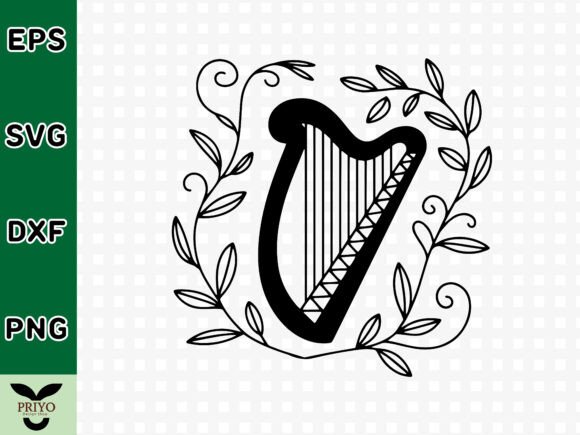
Assessing a Classical Harp Graphics Asset for Client Craft Projects
When a new design file lands on my desktop for review, I look past the promotional description and evaluate it through the lens of real-world client work. Today, I’m examining the Classical Harp with Laurel Wreath Border SVG. My first impression is immediate: this is an asset steeped in tradition, elegance, and a sense of ceremony. The harp, framed by the laurel wreath, evokes a mood of refined achievement, timeless artistry, and quiet celebration.
The Visual Mood: Where Elegance Meets Craft
This graphic design asset doesn’t shout; it whispers with authority. The intertwined classical elements suggest a style that is ornate yet balanced, detailed yet symbolic. It naturally fits projects for clients who operate in spaces where heritage and craftsmanship are valued. I envision a small business selling handmade musical instruments, a boutique offering artisanal soaps or teas with a “mastery” theme, or a local venue hosting classical concerts or literary awards. The laurel wreath border introduces an element of victory and recognition, broadening its use beyond purely musical contexts to any project celebrating accomplishment or quality.
Real Design Applications: From Mockups to Merchandise
In practical terms, how does this asset perform? For brand identity and logo design, it could serve as a central emblem for a niche brand, though its complexity requires careful simplification for a primary logo mark. As a supporting brand element, however, it’s excellent. For product labels and packaging design for a craft business, it could be a beautiful decorative accent on wine bottles, specialty food jars, or candle boxes, elevating the perceived value. In marketing visuals, it shines as a hero graphic for a website header announcing a seasonal collection or as a focal point on an event poster or invitation for a gala or workshop series.
Its description notes suitability for prints, t-shirt designs, mug making, and posters, which aligns with my assessment. For print-on-demand or Etsy product applications, it’s a strong candidate for sublimation design on tote bags or as printable wall art. As a Cricut project, the SVG format is key for creating intricate stickers, decorative vinyl for gifts, or elements for shadow boxes. For social media graphics, this illustration could form the core of a cohesive campaign for a handmade business—think Pinterest pins promoting a “Master Craftsman” series or Instagram posts highlighting a product launch.
Strategic Placement: Where This Asset Works Best
To maximize its impact, I’d deploy the Classical Harp with Laurel Wreath Border in specific layout areas. It excels in large layout areas where its details can breathe: full-page spreads in editorial design, large format posters, or the central image on a product mockup for a website. It works wonderfully as a decorative accent in themed collections, such as a series of product images for a “Golden Harvest” or “Classical Revival” campaign. The border itself can be isolated as a repeating pattern for packaging details or website backgrounds. As a digital design asset in a Canva template, it would provide users with a sophisticated, ready-made focal point.
Caution Zones: Navigating Limitations with Care
Every asset has its constraints. This design should be used carefully at very small sizes. The intricate lines of the harp strings and wreath leaves will vanish or become a muddy blob, harming visual hierarchy. Avoid crowded layouts where it competes with other complex elements; it needs space to be appreciated. Placing it on overly complex backgrounds will diminish its elegance. While versatile, it may clash with minimalist branding or feel out of place in strictly professional corporate materials like a tech startup’s annual report. The key is to let it serve the mood, not fight it.
The Professional Impact: Building Trust and Engagement
Using this asset effectively can significantly affect a project’s outcome. For readability, it should never overpower crucial text; treat it as a complementary visual. Its inherent emotional appeal of elegance and tradition can build visual trust with an audience seeking authenticity and quality, boosting audience engagement. When integrated consistently across a small business branding suite—from labels to social media—it enhances brand consistency and recognition. The overall impression it lends is one of polished, intentional creative design, moving a project from generic to distinctive.
Practical Designer Notes Before Client Use
Before committing this to a client project, I run a standard battery of tests. First, I test it in black and white to ensure the form holds without color. I check contrast by placing it on both light and dark backgrounds to confirm it remains legible. I preview it at thumbnail size and at full scale to understand its scaling limits. Crucially, I place it on real mockups—a t-shirt, a mug, a book cover—to visualize the final result. If the project involves physical output, I test print quality at the intended size.
I review the file formats: the SVG offers vector editability, allowing me to tweak colors or separate elements, which is invaluable. If a PNG with transparency is included, I inspect the edges for clean clipping. I experiment with typography alongside it, comparing it with a serif font for a harmonious classic feel, a clean sans serif font for a modern twist, or a script font for added luxury. Finally, I always confirm the commercial license terms. For a client’s commercial design work, unambiguous licensing is non-negotiable.
Conclusion: A Versatile Asset for The Right Narrative
The Classical Harp with Laurel Wreath Border is more than just a clipart or illustration; it’s a narrative device. It won’t fit every project, but for the client whose story involves craftsmanship, achievement, heritage, or refined celebration, it becomes a powerful tool. It helps the final design feel intentional and polished, moving beyond a basic product description to become a meaningful part of the brand’s visual language. For designers, marketers, and crafters working in these niches, it’s a design asset worth having in your creative marketplace toolkit, ready to elevate a concept when the right project arrives.